Friday, April 01, 2011
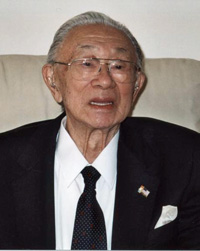
RIP Lou Gorman
I'll try to dig up some interviews I did with him a few years back.
Thursday, March 03, 2011
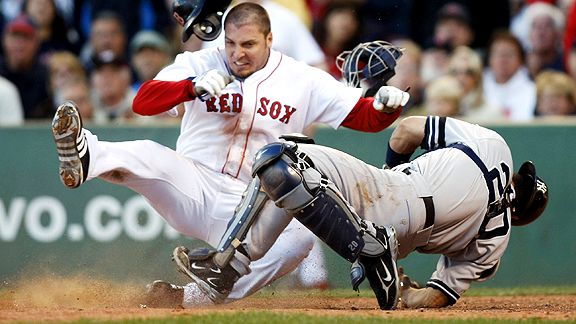
Red Sox vs. Yankees: This Time It's Impersonal
Tuesday, March 01, 2011
“Otey and Jackie: An Unlikely Rivalry”
“I was really curious if you remember anything about the tryout at Fenway for Jackie Robinson?”
“Yes, I know about that.”
“Do you remember it happening?”
“Yes, Cronin chose me - because I had good control - to throw batting practice to Robinson.”
“Oh, is that right?”
The first time I heard of Jackie Robinson’s 1945 tryout for the Red Sox, I was surprised that it had taken me so long to learn about it. I was a Sox fan. I had read plenty about my team and its history. On top of that, I had read loads about baseball history; somehow I had just missed this episode. I wasn’t alone, though. I asked around and was surprised to find that there were plenty of heavy-duty baseball fans who didn’t know about it either.
I learned some more about the Boston tryout and I found myself a tad proud. Sure I would have been prouder if the Sox had signed Robinson. But they didn’t. Neither did they sign the other two Negro Leaguers who tried out with him: Sam Jethroe and Marvin Williams. Isadore Muchnick, an official representing the city of Boston, my home town, made the tryout happen, though. I liked that. I didn't get caught up in the guilt of the Red Sox not signing Robinson on the basis of his race. To me, that was long in the past, a product of the time. Sure my team missed a historical opportunity and the chance to pick up a Hall of Fame player. But so did every other team in the league, and every team in the other league, too - except the Dodgers.
What interested me most was an obscure baseball story about a long-ago era in American history. I saw in Muchnick an ambitious, right-thinking man who acted without regard for his image or reputation, who became an integral link in the chain of events that led to baseball’s integration.
The coincidence that Jackie Robinson, the man who almost exactly two years later broke the color barrier in baseball, was one of the players there for a tryout has long since elevated this story from mere historical footnote to a significant, if not too widely known parable. However it has been repeated, the moral has always been the same: the Red Sox were racists. They could have had Jackie Robinson, but they didn’t want him because he was black.
This was the front bookend on a long shelf of evidence of the hiring bias of the Boston Red Sox. I thought such a cut and dried view of the tryout was too easy. That was another thing that always got me. It was a story that seemed to have been told wrongly for a long time. I decided I needed to find out more about what happened at that tryout.
The date and place I knew: Fenway Park, April 16, 1945. Why it happened and who was there was another matter.
The short of it was that some Boston politicians had pressured the local clubs on the issue of the color line. They rallied behind a City Councilman named Isadore Muchnick to compel the local Major League baseball teams (the Braves and the Red Sox) to audition black players while the color barrier still existed in baseball. The hope was that it would be a first step in breaking down that barrier. The Red Sox begrudgingly agreed, and the tryout happened. None of the three players were signed by the Red Sox. At its essence, that much of the story was mostly agreed upon.
In some versions Red Sox owner Tom Yawkey was there, in some he wasn’t. Those that had general manager Eddie Collins there usually had him indifferent to the whole affair. Most of the accounts included manager Joe Cronin, but only to say he had his back to the field.
There were supposedly white players trying out that day too. And, depending on whose account you read, they numbered as many as fifty.
I was fascinated by the mystery of it all. No one could agree on everything that happened. How could such an important event become so poorly understood? The official record of the tryout was so sparse that later accounts understandably offered conflicting and wildly differing descriptions. Even the Negro Leaguers themselves remembered few facts from that day or the week they spent in Boston leading up to the tryout. I quickly assumed that since there were so many different versions of what had happened that none of them could be true. I set out to find out what really happened.
I read every contemporary newspaper and magazine account of the tryout and came to the conclusion that only one of the writers was actually there. Wendell Smith of the Pittsburgh Courier was instrumental in organizing the tryout, and likely wrote the only firsthand account of the day. To me his version was likeliest to get the facts right. Other versions of the story, many of which contradicted Smith’s account, were based on second-hand retellings and probably not as accurate.
Next, I read what baseball writers had written about it more recently, and found that nearly nobody had found a witness to the event. This omission seemed strange to me. After all, people - lots of them - were there. Of course the principals were long dead, but there had to be someone alive who remembered being at Fenway Park the day it happened. Or at least someone was alive who remembered talking to people who were there when it happened. Thus, I began my search for witnesses.
I asked just about anybody I could find associated with the Red Sox or baseball in general in 1945 and had learned nothing.
“Do you remember the tryout for Jackie Robinson at Fenway on April 16,1945?” I asked Dave “Boo” Ferriss, the 1945 rookie sensation, who won 21 games on the mound for the Red Sox that year, what he knew about it. He never heard of it. He wasn’t called up until April 29, two weeks after the tryout. So he wasn’t around and he swore no one ever mentioned it to him.
I asked teammates Bobby Doerr and Johnny Pesky what they had heard of the tryout. Nothing again. They weren’t back from the war yet at that time. And if they had known anything about it, they had long since forgotten.
I asked former Fenway office boy, Monsignor Thomas Daly. He knew the ins and outs of everyone and everything that went on at Fenway Park in the mid-forties. He could still recite the address of almost every employee of the ball club in 1945 (including Lefty Grove’s in Lonaconing, Maryland). Daly had attended the Negro League exhibitions at Fenway in the mid-forties, but he had never heard of Jackie Robinson auditioning for the team.
I even asked former Yankee General Manager, Lee MacPhail, now 93-years-old, who started working for the Yankees in 1945 when his father Larry became a co-owner of the team. All I received back was a curt, non-memory of the event. “No. I never heard of that.”
When I finally dialed the number of the oldest living Red Sox player, and one of only two players from the 1945 Red Sox roster still living, I wasn’t expecting much.
My modest expectations were completely blown away with what I found. Here was a 95-year-old, cup of coffee, war call-up named William Otis “Otey” Clark of Boscobel, Wisconsin, not just telling me that he had heard of the tryout, but describing important details of the day he threw to the Kansas City Monarchs shortstop and future trailblazer, Jack Roosevelt Robinson. He said, “Joe Cronin would say ‘take a little off’ and all of that.”
I recoiled. I actually pulled the phone away from my ear and stared at the receiver, wondering if I had heard him right. I wanted to believe Otey, but I had spoken to too many elderly former players, who remembered their careers frozen in great moments, and then filled in the missing details in no predictable order. I have heard players say they saw plays while playing for teams they never played on. I’m not being mean or even cynical. They weren’t lying. They were aging. And age plays a funny trick on memory.
Over the years, there were minutiae of their days in the bigs they never even imagined someone else would care about. Why should they have remembered it all? So some obsessed fan, who called himself a writer, could call them up and ask them for instant recall, decades after these trivial things passed? Selfishly my answer was “yes”. I needed to know very obscure things about their playing days.
To their credit, the men I spoke with always did the best they could, and very few said no. But verifiable facts from them could be difficult to gain.
Truthfully, to be fair, just a few years ago, many of their stories could have easily entered the lore of baseball history - an old trunk full of dusty myths we love to hear and tell. In fact, lore was just what many of the stories of the Robinson tryout were based upon. Their most important details were misfitted hand-me-downs, reprinted on faith alone.
But with the recent advent of the internet, research has blown the dust off that trunk forever. When I did these interviews last year, any story from a 1945 issue of the Pittsburgh Courier could have been read from my home. Hell, I could have read it on my phone! Facts were checkable, and many of the great old stories were now, sadly, being shown to have been inaccurate. The myths were being busted.
That was, at essence, why I began studying the tryout. The mythology surrounding it had been taken as fact for so long, that the facts had been long ignored. And here was a fact on the other end of the line: Otey Clark pitched at the tryout for Jackie Robinson at Fenway Park in 1945.
My doubts about Otey faded; he seemed so sure. He described why he was there and at what time he came to the ball park. He remembered talking with a black reporter and how Jackie hit. He was right. He was there! Otey got only one year in the majors, the highlight of which was beating Bob Feller at Fenway Park. A neat happenstance, though, gave him another very notable performance.
Otey told me that his manager, Joe Cronin, called him up the day before and asked him to be at the ballpark at 10 am. He explained, “Cronin chose me because I had good control.” When he got there, he dressed and went out to the bullpen to warm up. According to Otey, Robinson hit well, but didn’t have a strong enough arm to play shortstop. He said, “I didn't think he could throw from the hole behind third.”
What was Otey doing there? Later accounts of that day mostly had high school players and other amateurs on the field with Robinson, Williams and Jethroe. Robinson even said later that he took it as a slight that he was made to try out with kids. But Robinson didn’t even recognize the “old man” giving him tips in the batting cage, Hall of Famer Hugh Duffy. It’s very possible he would not have known who some of the current Sox players were.
Wendell Smith’s story said that the Negro Leaguers shared the field with seven white aspirants, not high school kids. Could some of them have been Red Sox players? If so, it was unlikely that Smith would have recognized the Red Sox wartime call-ups either, since many of them had never played a major league game.
Otey was the pitcher Smith described in his story as “an impressive, ambitious recruit”. He may have been trying to exaggerate the hitters’ performances by elevating the pitcher’s ability. But at a month shy of thirty-years-old, Otey was still very ambitious to be a major leaguer, and he had some great games ahead of him. Officially, he wasn’t a major leaguer, yet. He wouldn’t be one until the next day, when he took the mound for the Sox in the seventh inning of the season opener at Yankee Stadium. There he pitched one-and-two-thirds no-hit innings with a strike out. His long aspirations were finally fulfilled.
As for being impressive, Otey impressed the Red Sox coaches well enough the previous fall. While pitching for the Red Sox AAA affiliate in Louisville, he threw thirteen innings with a dislocated kneecap he had suffered after being hit by a line drive from the first Baltimore Orioles batter he faced that day. “I’ve had worse than this playing football,” he said to his manager, Harry Leibold.
In 1945, he showed the Red Sox a flash of that toughness, when he beat Bob Feller 2-1 at Fenway Park on September 6, then shut out the A’s, also at home, on September 19. Both wins were complete games. In his next appearance, he gave up no earned runs in six and one-third innings of relief against the Yankees. Otey finished the 1945 season with four wins to four losses and a respectable 3.07 ERA.
In 1946, Otey found himself back in the minors, pitching with Louisville. Louisville had won the American Association title, which meant they played the champions of the International League in the Junior World Series. As fate would have it, in 1946 the International League champions were the Montreal Royals, whose star second baseman, Jackie Robinson, was just a year from being called up by the Dodgers. I asked Otey if he exchanged any words with Robinson when they met again. “Just hello,” he said.
Otey continued to play baseball for the next ten years or so, but never made it back to the majors. At the age of ninety-five, he had very few memories of his only season with the Red Sox, aside from pitching to Jackie Robinson and beating Bob Feller.
I was thrilled to find Otey and called him several times. Usually, he didn’t notice when I tested his memory by repeating the same questions. He just gave me the same answers every time.
Not only was Otey the oldest living Red Sox player, he was also the oldest living major leaguer born in Wisconsin. So, I contacted the Brewers in the hope of getting Otey a day of recognition at Miller Park. It didn’t happen. Otey politely declined to have anyone come to his home.
I last interviewed Otey on June 23. On October 20, he passed away at his home in Boscobel, Wisconsin. When I heard of his passing I felt terrible that I had never told anyone Otey’s story. For some stupid reason, I thought I had time.
Please leave questions or comments, or let me know if you’d like a copy of Wendell Smith’s article about the tryout emailed to you.
This isn’t meant to be the story of what happened at the tryout; that will come later. I only wrote this to introduce Otey to baseball fans who might not yet know him.
I’m writing a book about integrated baseball in Boston, for which I will give periodic updates here. Please follow the blog or check in occasionally. I happily welcome all feedback and new information.
Monday, January 03, 2011
Get Yourself Some Vintage Sox Uniforms
Wednesday, December 22, 2010
2011 Red Sox Nation Packages
Fan Pack – $14.95
2011 Commemorative Citizenship Card
2011 Red Sox Nation decal
2011 MLB.com® Gameday Audio for your PC
Personalized jersey picture with season schedule
Special early entry and access to Green Monster for batting practice (with valid game ticket)*
Eligibility for seat upgrades and prizes (with valid game ticket)*
10% discount at the Red Sox Team Store*
10% discount at the redsox.com® Online Shop*
Special redsox.com Shop offers throughout the season
Exclusive access to citizens-only section on redsox.com
Eligibility to enter RSN-only ticket opportunities*
Opportunity to receive a 30-day trial to the MLB Insiders Club*
Souvenir Pack – $29.95
Exclusive RSN t-shirt
Plus all Fan Pack benefits
Pre-Sale Pack – $60 – Limited time only
Exclusive opportunity to purchase up to four (4) tickets before the General Public Ticket On-sale
Fenway Park tour for two
Exclusive RSN t-shirt
Plus all Fan Pack benefits
Monster Pack – $299 – Limited quantity
Guaranteed Opportunity to purchase up to two (2) Green Monster tickets to a select 2011 Red Sox game
Exclusive opportunity to purchase up to four (4) tickets before the General Public Ticket On-sale
Fenway Park tour for four
Exclusive RSN t-shirt
Plus all Fan Pack benefits
Thursday, December 16, 2010
Aaron Rodgers Out vs. Pats?
Flynn likely to start at QB after Rodgers' concussion
By Gary D’Amato of the Journal Sentinel
Green Bay — Matt Flynn is used to dealing with a lot of reporters on Wednesday afternoons.
It was a bit different this week because he was actually talking to them.
Flynn's cubicle is next to Aaron Rodgers' in the Green Bay Packers' locker room and Rodgers typically addresses the media on Wednesdays. Sometimes Flynn, rendered all but invisible, has to wait for the interview to break up in order to get to his locker.
He had to wade through a knot of reporters again Wednesday, but this time they were waiting to talk to him.
"Typical Wednesday," Flynn joked. "A few more people."
All eyes are on Flynn, the third-year quarterback from Louisiana State who could get his first NFL start Sunday night against the New England Patriots at Gillette Stadium in Foxborough, Mass...
Sox Stories
"In ’47, Tom Yawkey wrote the script for Gonzalez-Crawford story"
By Clark Booth
"Fast forward 63 years to Orlando, Florida, alongside Disneyland, where organized baseball’s annual winter meetings, which gleefully celebrate the modern game’s wretched excess, have lately been held in a spectacular setting rich with bombast, illusion, and desperate yearning. And there is this question, worth considering: In 63 years, how much has really changed?"
"Arroyo set for start in Foxboro"
BY MEREDITH TIBBETTS
"Ex-Red Sox hurler performs acoustic concert Friday at Showcase
FOXBORO - Former Red Sox pitcher Bronson Arroyo is back in the area this weekend. He brought fans to their feet at Fenway years ago, and hopes to do the same Friday night at Showcase Live at Patriot Place. But this time he will have his guitar in hand, not a baseball."
Tuesday, December 14, 2010
Todays Headlines: Cliff Lee to Phil-Lees
By GEORGE A. KING III
"...Before midnight they were told by Lee's agent, Darek Braunecker, that Lee "was headed in a different direction." Minutes later, Texas was informed Lee was going to Philadelphia..."
Pats
"The numbers don’t lie"
By Dan Shaughnessy
"...The Patriots have not committed a turnover in their last five games. They have only nine turnovers all season. The NFL record for fewest turnovers is 13..."
Celts
"C's hold steady in power rankings"
By Chris Forsberg
Sox
"Sox still have one big hole"
Guerrier is coveted as GM Epstein tries to fix bullpen
By Peter Abraham
"...The bullpen remains, if not a mess, at least a work in progress..."
Bruins
It is now illegal to injure Bruins. I wonder what changed?
"Shelley suspended for two games"
by Fluto Shinzawa
Thursday, December 09, 2010
A Recipe out of Left-Field
Adapted from “One Big Table” by Molly O’Neill (Simon & Schuster)
Time: 30 minutes
3 tablespoons bacon fat, lard or vegetable oil
1 small onion, minced
1 large shallot, minced
1/4 cup finely chopped red bell pepper
1/4 cup finely chopped green bell pepper
2 teaspoons Lawry’s Seasoned Salt
2 teaspoons Old Bay Seasoning
2 teaspoons dried thyme
1 1/2 teaspoons dried garlic flakes
8 ounces skinless fillets of grouper, red snapper or a combination, cut into bite-size pieces
1 pint chopped shucked clams (or use half clams and half bay scallops), drained, juices reserved
4 cups whole milk
2 cups half-and-half
1/4 cup dry sherry
1 pound mussels in the shell, scrubbed and debearded
1 dozen (about 8 ounces) chopped shucked oysters, with their juice
2 small white potatoes, peeled and diced small
1/2 cup fresh or thawed frozen corn kernels
2 teaspoons fresh lemon juice
1/2 cup heavy cream
Kosher salt and black pepper.
1. In a large heavy pot, heat fat over medium heat. Add onion, shallot and bell peppers, and cook, stirring, until soft, about 5 minutes. Add seasoned salt, Old Bay, thyme and garlic flakes and cook about 1 minute, until aromatic. Add fish and clams and cook, stirring, 3 minutes, until fish is just opaque.
2. Add milk, half-and-half, sherry and reserved clam juices and bring to a simmer. Add mussels, oysters with their juices, potatoes and corn, and simmer very gently until mussels open and potatoes are tender, 5 to 8 minutes. If desired, remove mussels from shell and return to the soup.
3. Stir in lemon juice and cream. Season to taste with salt and pepper, and serve.
Yield: 10 to 12 servings.
Sox sign Carl Crawford
Are the Sox done yet?
Saturday, November 27, 2010
On This Day - Blech!
1947 - Triple Crown winner Ted Williams (.343, 32 HR,162 RBI) is edged out by Joe DiMaggio (.315, 20, 97) for the American League MVP Award by one point. One BBWAA member fails to include Williams anywhere on his ballot.
Tuesday, September 21, 2010
Onward to The Playoffs
Thursday, July 22, 2010
A Yankee Stadium First: Browns' Thomspon Integrates the Bronx
The two Negro League All-Stars were signed by the Browns from the Kansas City Monarchs one week earlier in attempt by St. Louis owner Dick Muckerman to boost ticket sales for his struggling franchise which had recently seen fewer than 500 tickets sold for a home game against the Senators. After five weeks, with no improvement in home attendance, the Browns declared “the trial” a failure and cut both players.
Friday, July 02, 2010
R.I.P. Cappy Harada, A Forgotten Baseball Great
I didn't remember Asahi was a newspaper too until I finally clicked the link and saw the dreaded headline "Cappy Harada, who shaped Japan-U.S. baseball, dies at 88".
I found out about Tsuneo "Cappy" Harada when doing some research about the Brooklyn Dodgers visiting Japan for a project my friend Pete was working on. Every time I read something about major leaguers going to Japan after World War II Cappy's name came up as an aside, almost in the margins. He was just there. He would be the fourth guy in a picture with Lefty O'Doul and other U.S. stars. He would be shown alongside MacArthur and an Asian dignitaries. He was always there, and I thought, "Who the hell is this guy?"
We interviewed Cappy in his home in Palm Desert, California where grapefruit trees lined his street and roadrunners ran in the yard. He thrilled us with tales of pre-WWII baseball in California and the battle in the Pacific. He spoke intimately about MacArthur, Joe DiMaggio and Marilyn Monroe. He enjoyed every second of recounting his long, fascinating life. I could hardly believe that this man's story was relatively unknown.
Below is a short biography I wrote about Cappy when I was organizing my thoughts for the project. It's far from complete, but gives you some idea of who he was. (Actually, I'm not sure I even wrote it. It just isn't very good, so I assumed it was by me.)
I'll try to write a more complete elegy this week.
Tsuneo “Cappy” Harada was born in Santa Maria, California in 1921 to immigrant Japanese parents. The consummate athlete, he earned the name Cappy by being captain of his high school basketball, baseball, and football teams.
In 1935 the first Japanese professional baseball team, which later became the Tokyo Giants, toured the U.S. playing exhibitions against amateur and professional teams. Cappy acted as second baseman and translator for a local 9 made up of merchants who scrimmaged against the Giants. At but 14 years old he had begun what would become a lifelong relationship with professional Japanese baseball.
While being scouted by the St. Louis Cardinals Cappy chose to enlist in the U.S. Army following the attack on Pearl Harbor. He was assigned to work with MacArthur as a Japanese interpreter and code breaker during the War and later joined MacArthur’s inner circle in running occupied Japan. As MacArthur grew frustrated at the progress of rebuilding Japan Cappy became instrumental in encouraging the return of baseball to the Japanese people who had seen their most beloved sport banned by their own government towards the end of the War. Cappy oversaw the revival of college baseball first, then professional, then the famed Koshien high school baseball tournament. In bringing about the return of professional baseball he invited American pros to tour Japan on good will tours beginning in 1949.
Cappy returned to American and became a scout for the San Francisco Giants introducing the first Japanese player, Masanori Murakami, to America in 1964. Cappy went on to become general manager of the Lodi Crushers.Here are some more stories about Cappy:
Short bio
A short obit
A Bio from the Japanese Consulate General in LA
A John Holway story reprinted by The Baseball Guru
Tuesday, May 18, 2010
A Two-Fer at Thom's Tonight
Friday, April 23, 2010
Lucky 7's Jackpot
The Celts sans Garnett played awesomely behind the hustle and girth of Big Babily in Game 2. The Heat were determined to teach the Celts a lesson after Garnett got into it with 6 or 7 of them on their bench (What a coward!) and boy did they. The Heat showed Garnett that the Celts could play really well with out him and that hurt his feelings. Game 3 is tonight in Miami and it promises to be packed with Celts fans. I just got back from that area and it's the Boston Riviera right now as April vacation has found New Englanders all over Florida. The radio ads down their proudly trumpeted that there are still plenty if tickets for the game for sale (starting at $10). Huge mistake, guys. All the New England families do down there is sit on the beach, eat free popcorn, drink blue cocktails, and listen to the radio. And, when they hear how cheap the tickets are compared to the other attractions-The Monkey Jungle in Miami, for instance, was $30 to get in-they'll be lining up like roast beef is free at Kelly's. In other important news, the Boston Public Library is under attack. Read all about the effort to stop the insanity here: Chin Music by Glen Stout. And speaking of chin music, the thieves of baseball's history are getting it high and tight right now thanks to the effort of the new website Hauls of Shame. Read all about the efforts to return the most important documents of baseball history to their rightful owners: the libraries. |
Sunday, April 11, 2010
Big Day for Boston?
The Sox beat Greinke and the Royals with 5 homeruns-two of them back-to-back by Hermida and Varitek in the fifth against Greinke. The Royals announcers seemed like they couldn't have been more disinterested in the dingers against their ace who gave up but 11 all of last year on his way to a Cy Young award.
The Celts led by Rasheed Wallace-start over-The Celts beat the Bucks. Garnett didn't play. Bogut couldn't play. Big Baby decided that instead of fighting little Jennings, this time he was going to fight the aged Kurt Thomas. Does Big Baby know that the MMA figters he dreams of facing will be slightly more ferocious? What I took from this game is Ray Allen is playing good basketball going into the playoffs. That's huge.
The Bruins are playing decent hockey right now. Their defense has been sharp and their passing terrific leaving them many good scoring opportunities every game. They just haven't been able to finish until yesterday when they put three short handed goals in in a 64-second span against Carolina winning 4-2 and clinching a playoff spot. With the win they avoided a first round match-up with today's opponent, Washington.
Before the championship game the commentators said that Wisconsin was possibly the best defense all-time in college hockey. That sounded something like the laurels Peyton Manning was receiving before the last Superbowl. He was the best quarterback ever, until he lost. Well, it would be hard to call the Badgers the best defense ever after giving up 4 third period goals to the Eagles who won the national championship 5 to zip over the Badgers.
It was a good day.
Saturday, April 10, 2010
Isn't it Grand?
Monday, April 05, 2010
Huge Opener at Fenway
We were wondering just how many would show up at Thom's for the Opener given the late start and the holidays; we'll never wonder again. The place was packed. In case you were trapped in Worcester or something, here's some video of what you missed: Exclusive Thom's Opener Video. Regardless of where you watched it, it was a great game, sort of, unless you're a Beckett owner, then you're team got off to a rough start. (And, for all of you CC owners, GFY.) Oh, to be at Fenway last night. Pedro threw out the first pitch. Herb Brooks was there. Steven Tyler sang. And, to top it off, Brother Love's Traveling Salvation Show's Neil Leslie Diamond sang what he sings. Then there was baseball. Youk pounded the ball and Pedroia took advatage of a poor, washed up pitcher. In the end, the comeback was glorious if for no other reason the cheering crowd washed out Michael Kay's voice in the bar. (Big fat GFY to YES too.) But, unknown to the rest of the world is the real reason the Sox won: The Jorge Hex. Yes, a Jorge Pasado bobblehead doll was duly hexed causing the critical passed ball last night. Hip-Hip... How good was last night's game? CHB had nothing bad to say. 'Nuff Ced. Tomorrow night it's back om at Thom's. Game 2 of 2010. We'll have some give-aways and, as always, Thom's Ale and Spaceman Ale are $4 during the game. Don't forget the Celts and Bruins (fingers crossed) are playoffs bound. We'll have all of those games and the NCAA Championship tonight and BC in the Frozen Four on Thursday. Not enough? Need more? Ok, Tuesday night my Lady Huskies play for the championship, again! How do you like them apples? So, come out and while you're there get a taste of our own rivalry brewing in the hood. Great moments are born from great opportunity. And that's what you have here tonight, boys. That's what you've earned here, tonight. One game. If we played 'em ten times, they might win nine. But not this game. Not tonight. Tonight, we skate with 'em. Tonight, we stay with 'em, and we shut them down because we can! Tonight, we are the greatest hockey team in the world. You were born to be hockey players -- every one of ya. And you were meant to be here tonight. This is your time. Their time -- is done. It's over. I'm sick and tired of hearin' about what a great hockey team the Soviets have. Screw 'em! This is your time!! Now go out there and take it! -Herb |
Friday, March 26, 2010
New England News Items
Ever dreamed of getting on the field at Fenway? You don't have to be a good baseball player, just a good person: Red Sox Run.
A-Rod's in trouble again.
The Pats love their draft packs and have plaenty of them, but when will they learn how to use them? Pats picks.